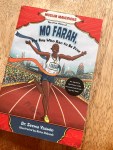
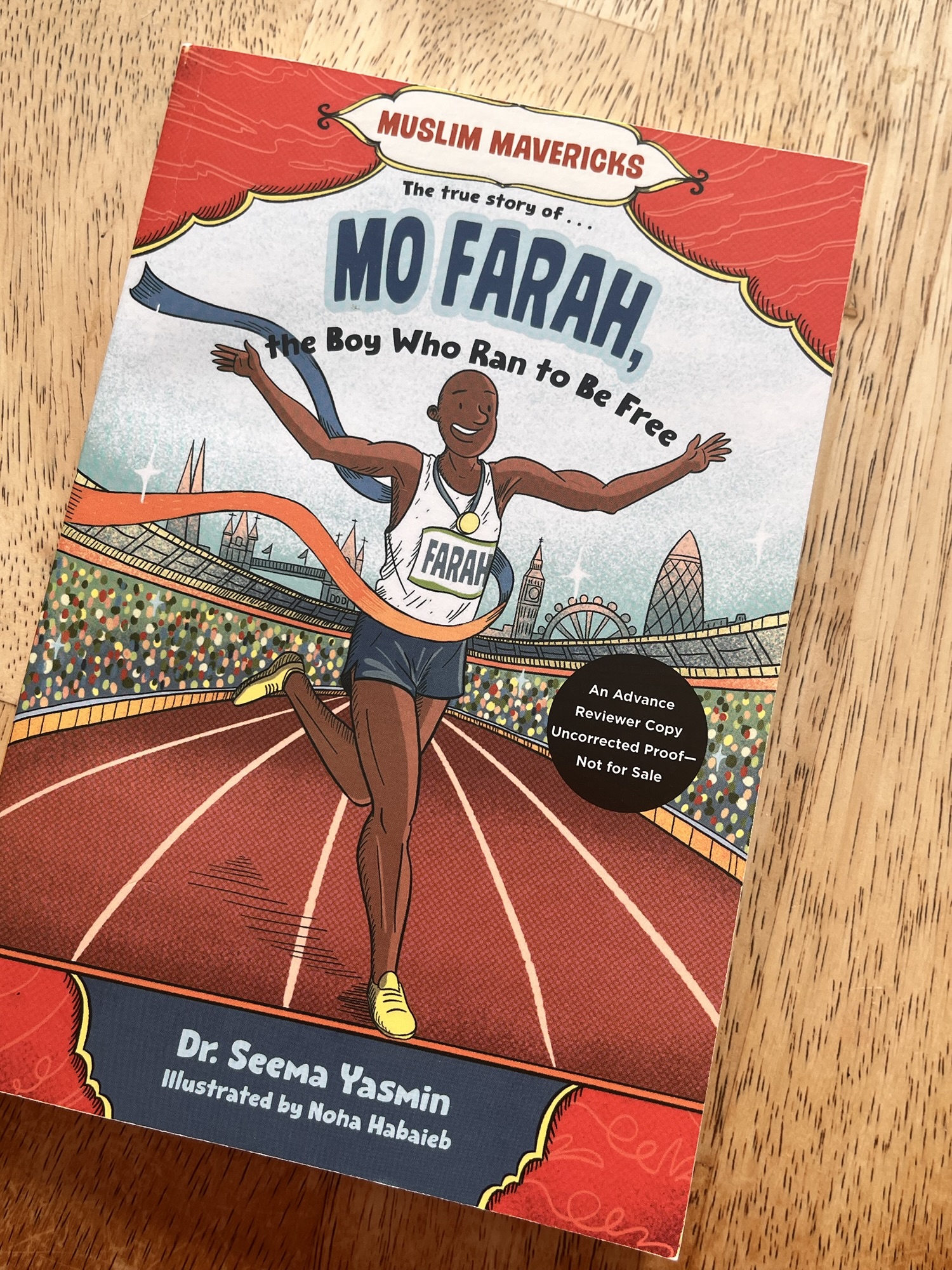
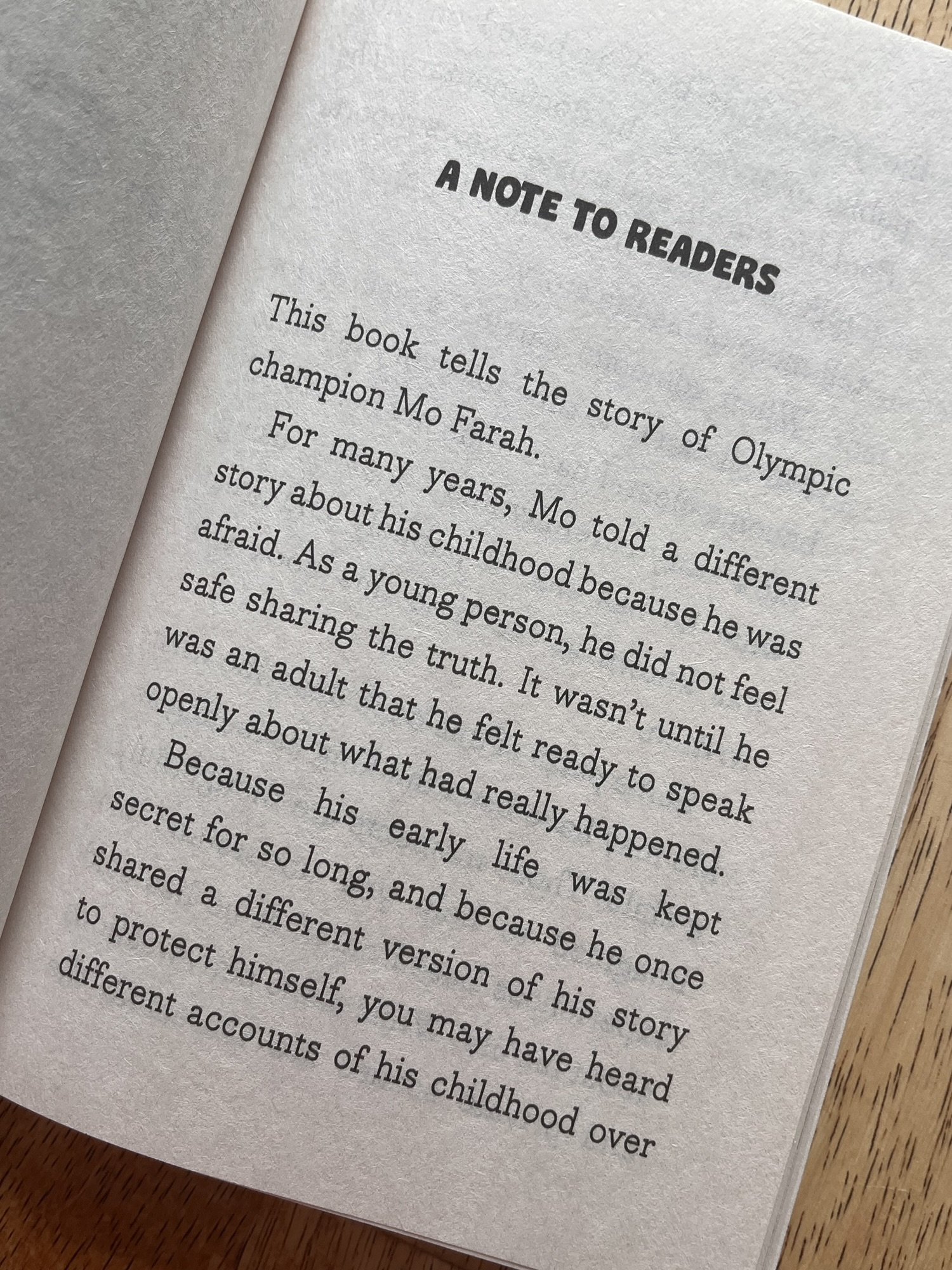
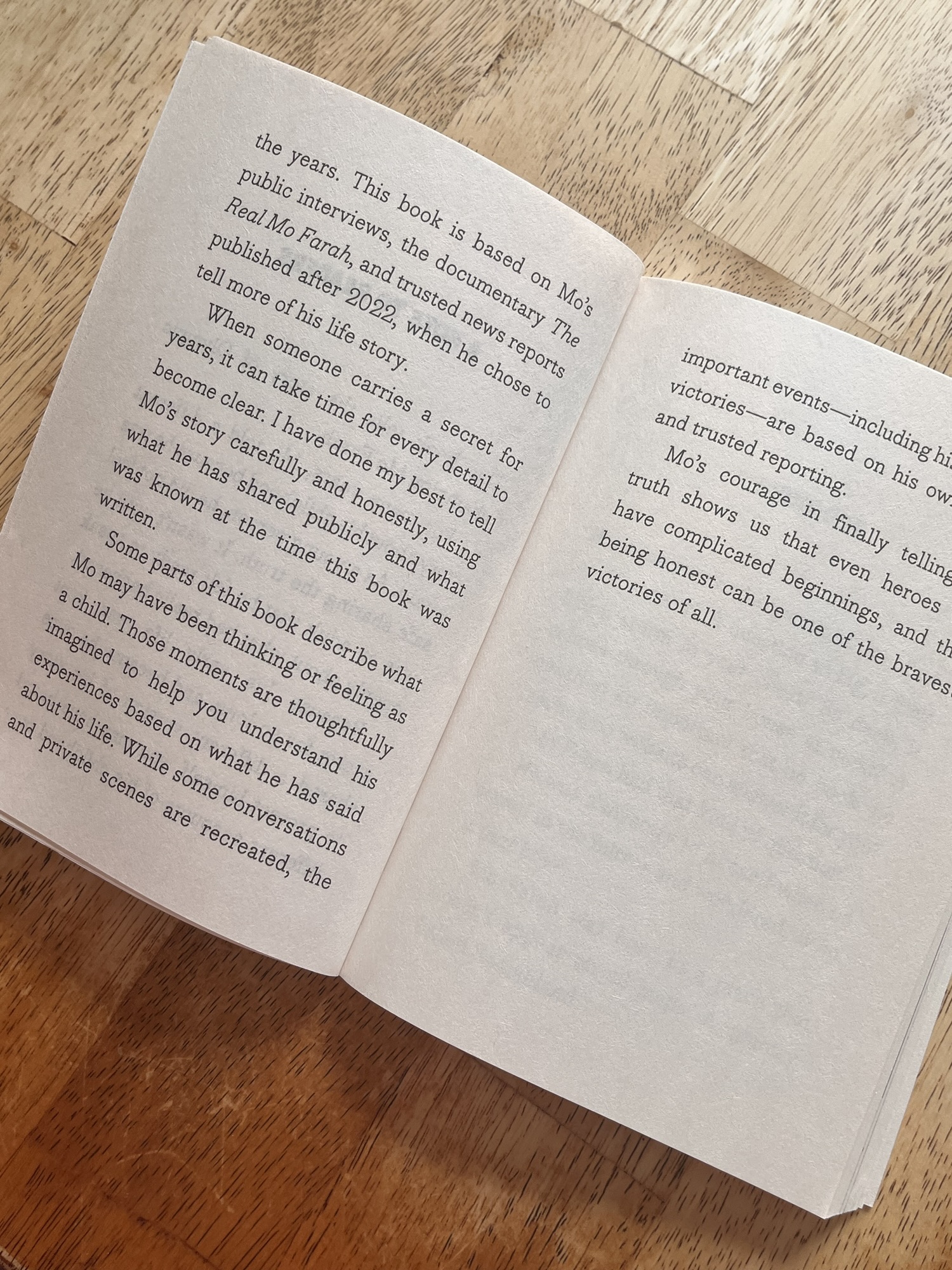
This 80 page illustrated early chapter book biography/non fiction story is the second in the Muslim Mavericks series, with the first being, Maysoon Zayid, the Girl who Can Can, and cements that the series is framed around verifiable facts with the author taking liberties to fill int he gaps and assume internalized processing and feelings since the author has not interviewed the subject matter themselves. The book is clear on this, so I don’t find it problematic necessarily, but have included pictures of the inside pages stating it and information sources so that readers can decide for themselves. I think young readers will be entertained by the story, gain empathy, and be saddened that human trafficking exists and happened to Hussein. The book reads a bit choppy and I found myself wanting more information, but recognize I’m not in the target audience, and can easily research it myself. My critiques of the first book still more or less exist for this one, I do not know who will be covered next in the series, and Islam is not a key element in the book and presumably in the subject matters public life. Islam is personal and I’m not passing judgement on the person, but just mentioning it in terms of the book series being about Muslim Mavericks by a Muslim focused imprint. The text mentions that he hears the athan, learns Quran in school, and prays to Allah swt, all this happens though in his very early life, no mention as it enduring or part of his identity as he matures.
SYNOPSIS:
Taken from the publisher:
From Somaliland to the Olympic arena, there’s no distance Mo can’t go!
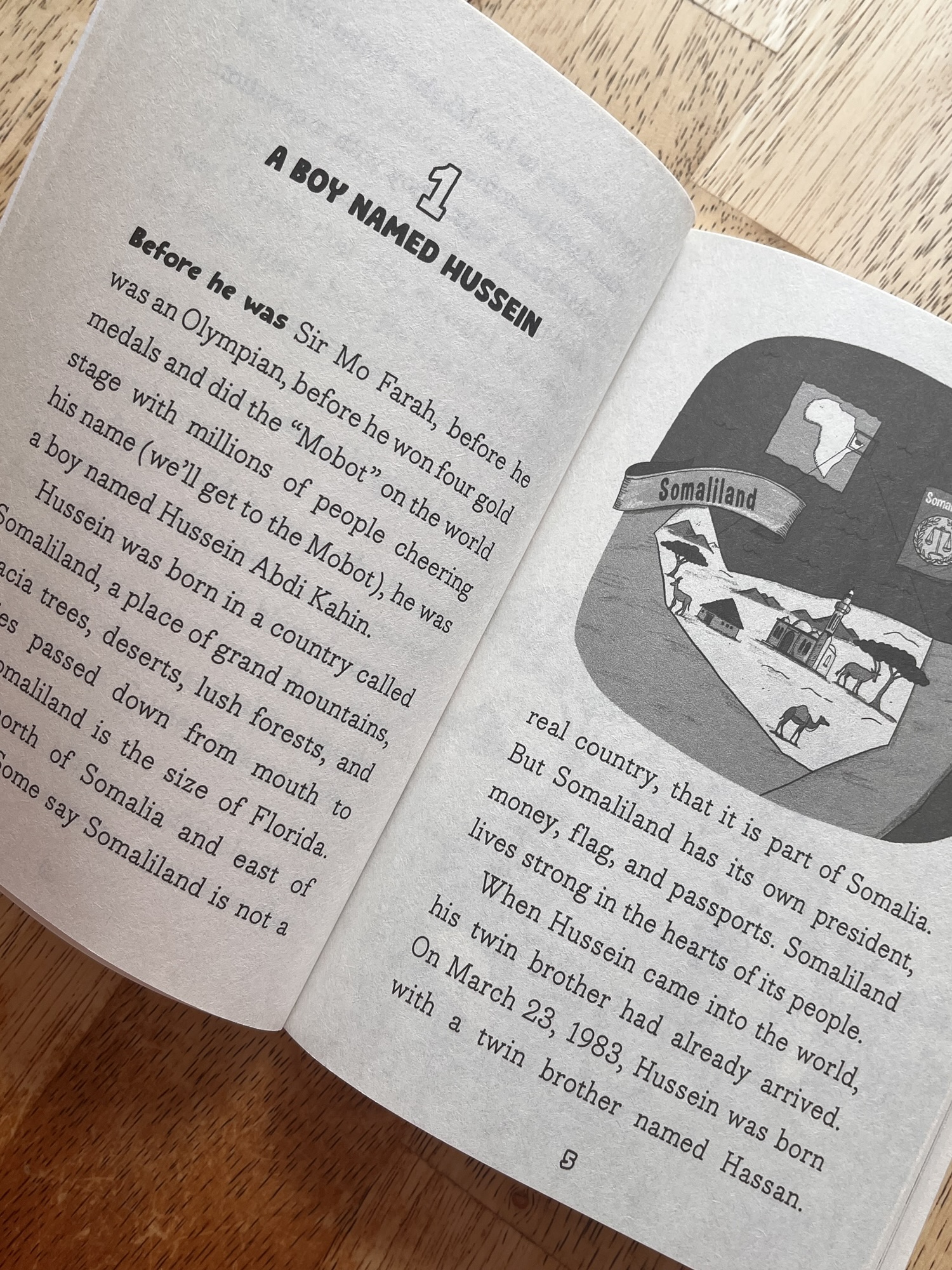
At the age of eight, Mo Farah moved across the world from Somaliland to London. It was difficult starting over in a new country, especially since he spoke very little English. But fortunately for Mo, running was a language everyone understood.
Once he started, he never stopped—smashing records and winning championships. Now, with four Olympic gold medals and six World titles, he is considered one of the most successful male track distance runners ever!
WHY I LIKE IT:
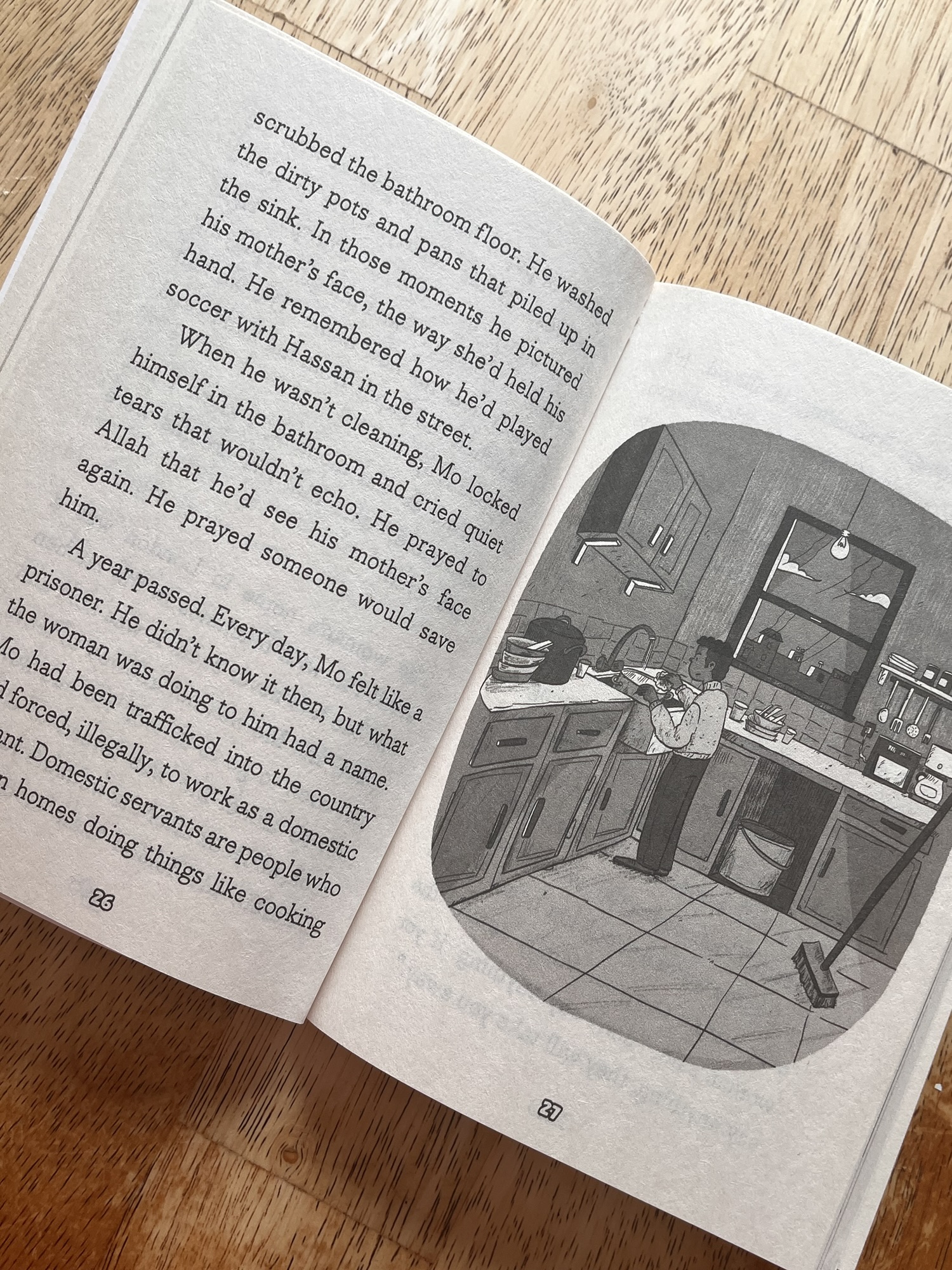
I like that it shows someone overcoming a hard life and introduces them to a set of circumstances they have probably never considered. It also provides some insight and understanding of what trafficking is, and does it in a child appropriate way. I also like that the teachers in the book are his support and his friend’s mom in many ways the hero of the story. Readers may not be able to identify with being a super athlete, having to leave home at a young age, being forced into servitude and having your name changed, but they can recognize the support that exists around them.
FLAGS:
War, conflict, death, human trafficking, forced servitude, prevented from going to school, political unrest, struggles with dyslexia, stress.


